
 AI Search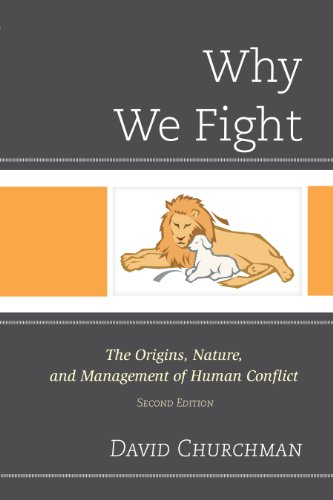
Why we fight : the origins, nature, and management of human conflict / David Churchman.
Material type: TextEdition: Second editionDescription: 321 p.: illISBN:
 - 0761861378
- 9780761861379
- Origins, nature, and management of human conflict
- HM1116 C559 W 2013
 English Books
| Cover image | Item type | Current library | Home library | Collection | Shelving location | Call number | Materials specified | Vol info | URL | Copy number | Status | Notes | Date due | Barcode | Item holds | Item hold queue priority | Course reserves | |
|---|---|---|---|---|---|---|---|---|---|---|---|---|---|---|---|---|---|---|
|
English Books
|
MATRIX Library General Eng/FL.3 | General Books | HM1116 C559 W 2013 (Browse shelf(Opens below)) | C.1 | Available | 1000372501 |
1. Criteria for good theory -- 2. Conflict analysis -- Risk -- Prisoners' Dilemma -- Bayes's Theorem -- Lattice Theory -- Pareto Optimization -- Strategic choice -- Fair division -- 3. The nature of man -- Aggression -- Early man -- Sociobiology -- Aggression in primates -- 4. Aggression and the mind -- Aggression as instinct -- Frustration-aggression -- Aggression as learned behavior -- Human Needs Theory -- Psychiatric theories -- 5. Intellectual conflict -- Man -- History -- society -- Nature -- God -- The importance of dissent -- 6. Moral conflict -- Origins of morality -- Individual moral development -- Four forms of moral conflict -- Managing moral conflicts -- 7. Interpersonal conflict -- Personality and conflict -- Personality types and their measurement -- The "Generation Gap" -- Low conflict societies -- Family conflict -- Dual variable models -- Power -- Linguistic models of communication -- Systems models of communication -- Social models of communication -- Culture and interpersonal conflicts -- 8. Gender conflict -- Discrimination -- Communication style -- Sexual harassment -- Relational aggression -- Women in peace and war -- The matriarchal past -- 9. Organizational conflict -- Organizational development -- Labor-management conflict -- Leadership -- Crisis management -- Competitive strategy -- Law of Unintended Consequences -- 10. Community conflict -- Class conflict -- Ethnic conflict -- Gangs -- Hostage crises -- Conflict and stress -- Wisdom of crowds -- 11. Political conflict -- Governmental systems -- Deliberative assemblies -- Voting systems -- Redistricting -- Vote fraud -- Tax systems -- Tragedy of the Commons and the Free Rider Problem -- 12. Possible causes of war -- Reproductive success -- Ecological equilibrium -- Territorial imperative -- Relative deprivation -- Nation-states -- Characteristics of states -- Number of bordering states -- Polarity -- Human rights -- Arms races -- Correlates of war -- Expected utility -- 13. Just War in eight cultures -- Roman Catholic -- Greek Orthodox -- Jewish -- Muslim -- Hindu -- Buddhist -- Chinese -- Japanese -- Just War today -- 14. Interstate conflict -- Origins of war -- Types of war -- Strategic and tactical theory -- Strategic geography -- 15. Asymmetric conflict -- Economic warfare -- Humanitarian war -- Guerilla or low intensity warfare -- Terrorism -- Counter-terrorism -- Piracy -- Cyber warfare -- Lawfare -- 16. The search for peace -- What is peace? -- Diplomacy -- Arms control vs. peace through strength -- Balance of power -- World government and peacekeeping -- Pacifism and nonviolence -- Reconciliation -- 17. Dispute resolution -- torts -- Negotiation -- Distributive negotiation -- Integrative negotiation -- Third-party interventions -- The Agreement Circumplex -- 18. Putting conflict theory to use -- 19. Improving conflict theory -- Appendix : Major fallacies in logic.
HKBU library
YT2025 M10
There are no comments on this title.