
 AI Search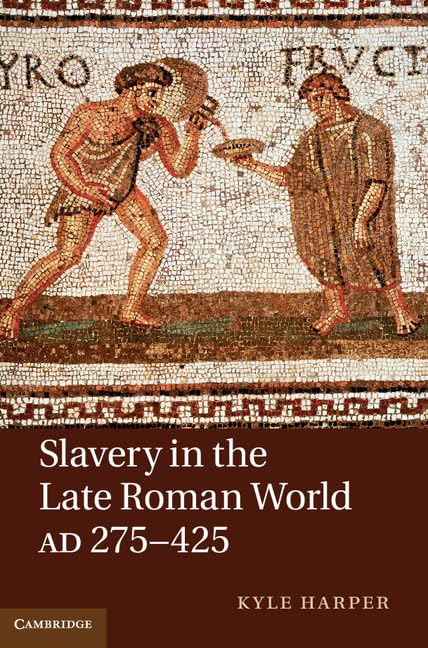
Slavery in the late Roman world, AD 275-425 / Kyle Harper.
Material type: TextPublication details: Cambridge, UK ; New York : Cambridge University Press, 2011.Description: 611 p. : illISBN:
 - 9780521198615
- 0521198615
- HT863 H293 S 2011
 English Books
| Cover image | Item type | Current library | Home library | Collection | Shelving location | Call number | Materials specified | Vol info | URL | Copy number | Status | Notes | Date due | Barcode | Item holds | Item hold queue priority | Course reserves | |
|---|---|---|---|---|---|---|---|---|---|---|---|---|---|---|---|---|---|---|
|
English Books
|
MATRIX Library General Eng/FL.3 | General Books | HT863 H293 S 2011 (Browse shelf(Opens below)) | C.1 | Available | 1000360957 |
Browsing MATRIX Library shelves,Shelving location: General Eng/FL.3,Collection: General Books Close shelf browser (Hides shelf browser)

|

|

|

|

|

|

|
||
| HT395 F177 M 2002 The making of the European spatial development perspective : | no masterplan / | HT653 E93 A 2007 The aristocracy in the county of Champagne, 1100-1300 / | HT690.G3 R711 C 2006 Civic culture and everyday life in early modern Germany / | HT863 H293 S 2011 Slavery in the late Roman world, AD 275-425 / | HT867 D261 P 1975 The problem of slavery in the age of Revolution, 1770-1823 / | HT1052 S291 S 2011 Slavery, freedom, and abolition in Latin America and the Atlantic world / | HT1076 M266 L 2014 The life and poems of a Cuban slave / |
Machine generated contents note: Part I. The Economy of Slavery: Introduction; 1. Among slave systems: a profile of late Roman slavery; 2. The endless river: the supply and trade of slaves; 3. Oikonomia: households, consumption, and production; 4. Agricultural slavery: exchange, institutions, estates; Part II. The Making of Honorable Society: Introduction; 5. Semper timere: the aims and techniques of domination; 6. Self, family, and community among slaves; 7. Sex, status, and social reproduction; 8. Mastery and the making of honor; Part III. The Imperial Order: Introduction; 9. Citizenship and litigation: slave status after the Antonine constitution; 10. The enslavement of Mediterranean bodies: child exposure and child sale; 11. The community of honor: the state and sexuality; 12. Rites of manumission, rights of the freed; Conclusion: Roman slavery, proto-modernity, and the end of antiquity; Appendices.
Machine generated contents note: Part I. The Economy of Slavery: Introduction; 1. Among slave systems: a profile of late Roman slavery; 2. The endless river: the supply and trade of slaves; 3. Oikonomia: households, consumption, and production; 4. Agricultural slavery: exchange, institutions, estates; Part II. The Making of Honorable Society: Introduction; 5. Semper timere: the aims and techniques of domination; 6. Self, family, and community among slaves; 7. Sex, status, and social reproduction; 8. Mastery and the making of honor; Part III. The Imperial Order: Introduction; 9. Citizenship and litigation: slave status after the Antonine constitution; 10. The enslavement of Mediterranean bodies: child exposure and child sale; 11. The community of honor: the state and sexuality; 12. Rites of manumission, rights of the freed; Conclusion: Roman slavery, proto-modernity, and the end of antiquity; Appendices.
HKBU library
YT2025 M10
"Capitalizing on the rich historical record of late antiquity, and employing sophisticated methodologies from social and economic history, this book reinterprets the end of Roman slavery. Kyle Harper challenges traditional interpretations of a transition from antiquity to the Middle Ages, arguing instead that a deep divide runs through 'late antiquity', separating the Roman slave system from its early medieval successors. In the process, he covers the economic, social and institutional dimensions of ancient slavery and presents the most comprehensive analytical treatment of a pre-modern slave system now available. By scouring the late antique record, he has uncovered a wealth of new material, providing fresh insights into the ancient slave system, including slavery's role in agriculture and textile production, its relation to sexual exploitation, and the dynamics of social honor. By demonstrating the vitality of slavery into the fourth century, the author shows that Christianity triumphed amidst a genuine slave society"--
There are no comments on this title.