
 AI Search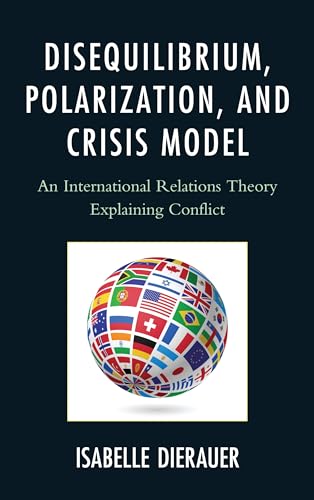
Disequilibrium, polarization, and crisis model : an international relations theory explaining conflict / Isabelle Dierauer.
Material type: TextDescription: 269 pISBN:
 - 9780761861058
- JZ1242 D563 D 2013
 English Books
| Cover image | Item type | Current library | Home library | Collection | Shelving location | Call number | Materials specified | Vol info | URL | Copy number | Status | Notes | Date due | Barcode | Item holds | Item hold queue priority | Course reserves | |
|---|---|---|---|---|---|---|---|---|---|---|---|---|---|---|---|---|---|---|
|
English Books
|
บัณฑิตวิทยาลัย General Collection | General Books | JZ1242 D563 D 2013 (Browse shelf(Opens below)) | C.1 | Available | 1000384867 |
Introduction -- Research Design and Methodology -- Literature Review -- Disequilibrium, Polarization and Crisis Model -- Case Studies of Internal Conflicts -- Case Study of Systemic War.
HKBU library
YT2025 M09
"Different international relations theorists have studied political change, but all fall short of sufficiently integrating human reactions, feelings, and responses to change in their theories. This book adds a social psychological component to the analysis of why nations, politically organized groups, or states enter into armed conflict. The Disequilibrium, Polarization, and Crisis Model is introduced, which draws from prospect theory, realism, liberalism, and constructivism. The theory considers how humans react and respond to change in their social, political, and economic environment. Three case studies, the U.S. Civil War, the Yugoslav Wars (1991-1995), and the First World War are applied to illustrate the model's six process stages: status quo, change creating shifts that lead to disequilibrium, realization of loss, hanging on to the old status quo, emergence of a rigid system, and risky decisions leading to violence and war."--Publisher's website.
There are no comments on this title.