
 AI Search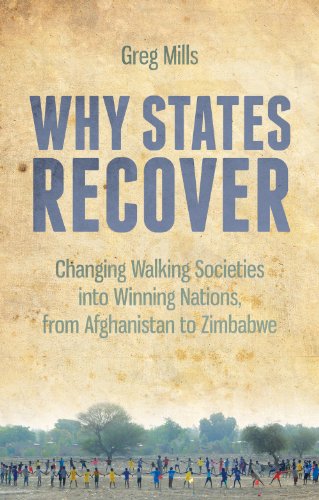
Why states recover : changing walking societies into winning nations -- from Afghanistan to Zimbabwe / Greg Mills.
Material type: TextPublication details: London : Hurst & Company, 2014Description: 689 p. : illISBN:
 - 1849044619
- 9781849044615
- HC21 M657 W 2014
 English Books
| Cover image | Item type | Current library | Home library | Collection | Shelving location | Call number | Materials specified | Vol info | URL | Copy number | Status | Notes | Date due | Barcode | Item holds | Item hold queue priority | Course reserves | |
|---|---|---|---|---|---|---|---|---|---|---|---|---|---|---|---|---|---|---|
|
English Books
|
MATRIX Library General Eng/FL.3 | General Books | HC21 M657 W 2014 (Browse shelf(Opens below)) | C.1 | Available | 1000360816 |
HKBU Library
State failure takes many forms. Somalia offers one extreme. A collapse of central authority as the outcome of a prolonged civil war, where authority descends into competing factions -- headed by warlords -- around the spoils of local commerce, power and international aid. At the other end of the scale is Malawi. During President Bingu's second term in office, the country's economy collapsed as a result of poor policies and personalised politics. On the surface, save the petrol queues, it was stable; underneath, the polity was fractured, the economy broken. Between these two extremes of state failure are all manner of examples. Drawing on research in more than thirty countries, incorporating interviews with a dozen leaders Mills disaggregates state failure and identifies instances of recovery in Latin America, Asia and Africa. All the while he returns to his key questions: how do countries recover, and what roles ought insiders and outsiders play to aid that process?--Jacket.
There are no comments on this title.