
 AI Search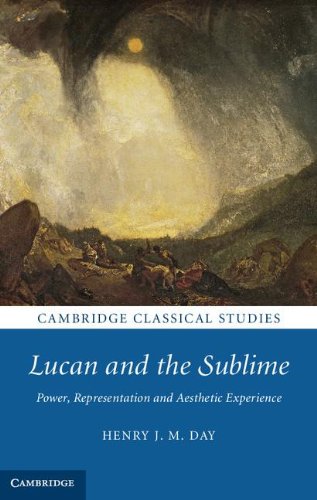
Lucan and the sublime : power, representation and aesthetic experience / Henry J. M. Day.
Material type: TextSeries: Cambridge classical studiesPublication details: Cambridge ; New York : Cambridge University Press, 2013.Description: 262 pISBN:
 - 9781107020603
- 1107020603
- PA6480 D273 L 2013
 English Books
| Cover image | Item type | Current library | Home library | Collection | Shelving location | Call number | Materials specified | Vol info | URL | Copy number | Status | Notes | Date due | Barcode | Item holds | Item hold queue priority | Course reserves | |
|---|---|---|---|---|---|---|---|---|---|---|---|---|---|---|---|---|---|---|
|
English Books
|
MATRIX Library General Eng/FL.3 | General Books | PA6480 D273 L 2013 (Browse shelf(Opens below)) | C.1 | Available | 1000374104 |
Browsing MATRIX Library shelves,Shelving location: General Eng/FL.3,Collection: General Books Close shelf browser (Hides shelf browser)

|

|

|

|

|

|

|
||
| PA6056 H784 R 2007 Roman satire / | PA6374 W267 C 2012 Claudian and the Roman epic tradition / | PA6411 H811 2009 Horace : | Odes and Epodes / | PA6480 D273 L 2013 Lucan and the sublime : | power, representation and aesthetic experience / | PA6825 W734 N 2011 Now and Rome : | Lucan and Vergil as theorists of politics and space / | PA8518 M286 E 2003 Erasmus in the twentieth century : | interpretations, c 1920-2000 / | PC4074 M298 S 1997 The Spanish-speaking world : | a practical introduction to sociolinguistic issues / |
HKBU Library
"This is the first systematic study of the sublime in Lucan. Drawing upon renewed critical interest in the tradition of philosophical aesthetics, Henry Day argues that the category of the sublime offers a means of moving beyond readings of Lucan's epic poem Bellum Civile in terms of political commitment or nihilism. Demonstrating in dialogue with theorists from Burke and Kant to Freud, Lyotard and Ankersmit the continuing vitality of Longinus' foundational treatise On the Sublime, Day charts Lucan's complex and instructive exploration of the relationship between sublimity and ethical discourses of freedom and oppression. Through its representation of the apocalypse of civil war and metapoetic accounts of its own genesis, through its heated linguistic texture and proclaimed effects upon future readers, and, most powerfully of all, through its representation of its twin protagonists Caesar and Pompey, the Bellum Civile emerges as a central text in the history of the sublime"--
There are no comments on this title.