
 AI Search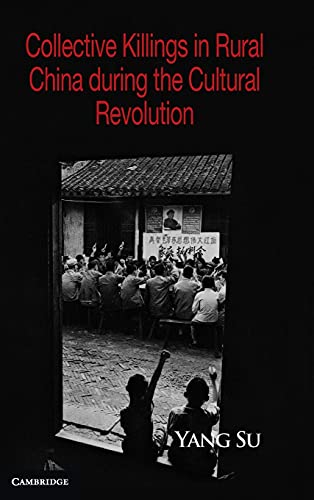
Collective killings in rural China during the cultural revolution / Yang Su.
Material type: TextSeries: Publication details: New York : Cambridge University Press, 2011.Description: 300 p. : illISBN:
 - 9780521198080
- 0521198089
- 9780521173810
- 0521173817
- DS778.7 S817 C 2011
 English Books
| Cover image | Item type | Current library | Home library | Collection | Shelving location | Call number | Materials specified | Vol info | URL | Copy number | Status | Notes | Date due | Barcode | Item holds | Item hold queue priority | Course reserves | |
|---|---|---|---|---|---|---|---|---|---|---|---|---|---|---|---|---|---|---|
|
English Books
|
MATRIX Library General Eng/FL.3 | General Books | DS778.7 S817 C 2011 (Browse shelf(Opens below)) | C.1 | Available | 1000369725 |
Browsing MATRIX Library shelves,Shelving location: General Eng/FL.3,Collection: General Books Close shelf browser (Hides shelf browser)

|

|

|

|

|

|

|
||
| DS777.75 T265 E 2007 The end of the Maoist era : | Chinese politics during the twilight of the Cultural Revolution, 1972-1976 / | DS778.7 G211 B 2008 The battle for China's past : | Mao and the Cultural Revolution / | DS778.7 L926 W 2007 When Huai flowers bloom : | stories of the Cultural Revolution / | DS778.7 S817 C 2011 Collective killings in rural China during the cultural revolution / | DS778.7 W163 F 2009 Fractured rebellion : | the Beijing Red Guard movement / | DS779 D584 D 2008 The dragon's hidden wings : | how China rises with its soft power / | DS779 R332 2000 Reform, legitimacy and dilemmas : | China's politics and society / |
Kill thy neighbor -- On the record -- Community and culture -- Class enemies -- Mao's ordinary men -- Demobilizing law -- Framing war -- Patterns of killing -- Understanding atrocities in plain sight.
HKBU library
YT2025 M08
"The violence of Mao's China is well known, but its extreme form is not. In 1967 and 1968, during the Cultural Revolution, collective killings were widespread in rural China in the form of public execution. Victims included women, children, and the elderly. This book is the first to systematically document and analyze these atrocities, drawing data from local archives, government documents, and interviews with survivors in two southern provinces. This book extracts from the Chinese case lessons that challenge the prevailing models of genocide and mass killings and contributes to the historiography of the Cultural Revolution, in which scholarship has mainly focused on events in urban areas"--Provided by publisher.
There are no comments on this title.