
 AI Search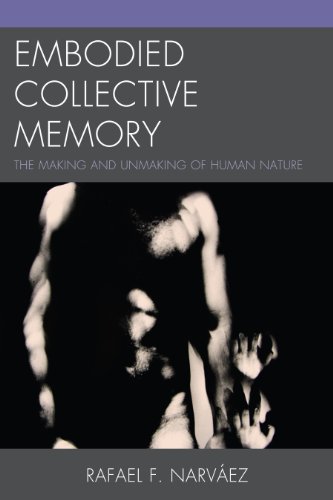
Embodied collective memory : the making and unmaking of human nature / Rafael F. Narváez.
Material type: TextPublication details: Lanham, MD : University Press of America, 2013Description: 222 pISBN:
 - 9780761858799
- 0761858792
- BF637 N238 E 2013
 English Books
| Cover image | Item type | Current library | Home library | Collection | Shelving location | Call number | Materials specified | Vol info | URL | Copy number | Status | Notes | Date due | Barcode | Item holds | Item hold queue priority | Course reserves | |
|---|---|---|---|---|---|---|---|---|---|---|---|---|---|---|---|---|---|---|
|
English Books
|
MATRIX Library General Eng/FL.3 | General Books | BF637 N238 E 2013 (Browse shelf(Opens below)) | C.1 | Available | 1000372867 |
Browsing MATRIX Library shelves,Shelving location: General Eng/FL.3,Collection: General Books Close shelf browser (Hides shelf browser)

|

|

|

|

|

|

|
||
| BF637 M437 B 2001 Brief NLP therapy / | BF637.M45 H497 D 2009 A different wisdom : | reflections on supervision practice / | BF637 M887 I 2003 The importance of being understood : | folk psychology as ethics / | BF637 N238 E 2013 Embodied collective memory : | the making and unmaking of human nature / | BF637 R414 P 1998 Person-centred counselling : | an experiential approach / | BF637 S129 2006 The SAGE handbook of nonverbal communication / | BF637 T768 1999 Training counselling supervisors : | strategies, methods, and techniques / |
HKBU Library
The human body is not a given fact; it is not, as Descartes believed, a "(Bmachine made up of flesh and bones." The body is acquired, achieved, and learned. It is thus full of mimetic and mnemonic implications. The body remembers, and it does so in collectively relevant ways. Gestures, corporeal and phonetic rhythms, affective idioms, and emotional styles -- perceptual, sensorial, motoric, and affective schemata -- are all largely learned in shared social contexts. These aspects of the embodied experience are often consigned to habit, to bodily automatisms, and to corporeal memories that reflect aspects of culture. But if the body reflects certain aspects of culture that press to become naturalized and organically attached to social actors, it also resists these kinds of cultural pressures. These adaptive and resistive dynamics, as this book shows, are not without consequences for individuals and groups. These processes can result in both advantages and disadvantages for social actors. They can take us toward certain futures while foreclosing others. It is therefore necessary to understand how, why, and to what extent corporeal memories are constructed but also resisted, modified, or created anew.
There are no comments on this title.