
 AI Search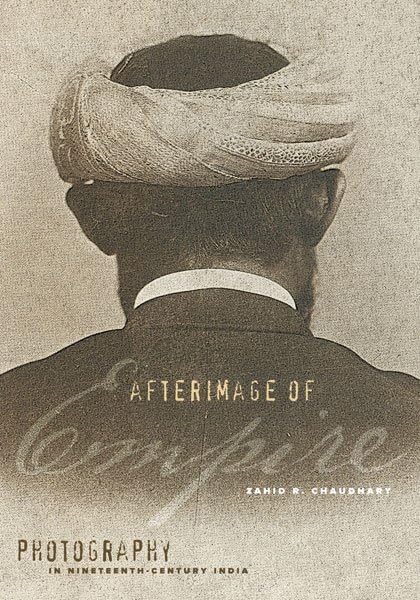
Afterimage of empire : photography in nineteenth-century India / Zahid R. Chaudhary.
Material type: TextDescription: 258 pages,12 colored plates : illustrationsISBN:
 - 9780816677481
- 9780816677498
- TR103 C426 A 2012
 English Books
| Cover image | Item type | Current library | Home library | Collection | Shelving location | Call number | Materials specified | Vol info | URL | Copy number | Status | Notes | Date due | Barcode | Item holds | Item hold queue priority | Course reserves | |
|---|---|---|---|---|---|---|---|---|---|---|---|---|---|---|---|---|---|---|
|
English Books
|
MATRIX Library General Eng/FL.3 | General Books | TR103 C426 A 2012 (Browse shelf(Opens below)) | C.1 | Available | 1000362604 |
Machine generated contents note: Contents -- Introduction: Sensation and Photography 1. Death and the Rhetoric of Photography: X Marks the Spot 2. Anaesthesis and Violence: A Colonial History of Shock 3. Armor and Aesthesis: The Picturesque in Difference 4. Famine and the Reproduction of Affect: Pleas for Sympathy 5. Coda: Sensing the Past -- Acknowledgments -- Appendix: Translations -- Notes -- Bibliography -- Index.
HKBU library
YT2025 M08
" Afterimage of Empire provides a philosophical and historical account of early photography in India that focuses on how aesthetic experiments in colonial photography changed the nature of perception. Considering photographs from the Sepoy Revolt of 1857 along with landscape, portraiture, and famine photography, Zahid R. Chaudhary explores larger issues of truth, memory, and embodiment.Chaudhary scrutinizes the colonial context to understand the production of sense itself, proposing a new theory of interpreting the historical difference of aesthetic forms. In rereading colonial photographic images, he shows how the histories of colonialism became aesthetically, mimetically, and perceptually generative. He suggests that photography arrived in India not only as a technology of the colonial state but also as an instrument that eventually extended and transformed sight for photographers and the body politic, both British and Indian.Ultimately, Afterimage of Empire uncovers what the colonial history of the medium of photography can teach us about the making of the modern perceptual apparatus, the transformation of aesthetic experience, and the linkages between perception and meaning. "--
There are no comments on this title.