
 AI Search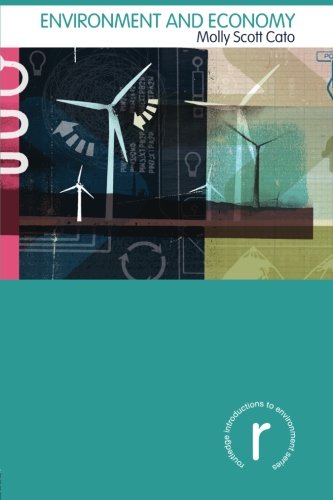
Environment and economy / by Molly Scott Cato.
Material type: TextPublication details: London ; New York : Routledge, 2011.Description: xviii, 263 p. : illISBN:
 - 9780415477413
- HC79 C366 E 2011
 English Books
| Cover image | Item type | Current library | Home library | Collection | Shelving location | Call number | Materials specified | Vol info | URL | Copy number | Status | Notes | Date due | Barcode | Item holds | Item hold queue priority | Course reserves | |
|---|---|---|---|---|---|---|---|---|---|---|---|---|---|---|---|---|---|---|
|
English Books
|
MATRIX Library General Eng/FL.3 | General Books | HC79 C366 E 2011 (Browse shelf(Opens below)) | C.1 | Available | 1000362382 |
Browsing MATRIX Library shelves,Shelving location: General Eng/FL.3,Collection: General Books Close shelf browser (Hides shelf browser)

|

|

|

|

|

|

|
||
| HC79.A4 C641 C 2011 Carbon abatement costs and climate change finance / | HC79 B615 2012 The biological consequences of socioeconomic inequalities / | HC79 C366 2013 The bioregional economy : | land, liberty and the pursuit of happiness / | HC79 C366 E 2011 Environment and economy / | HC79.C6 C456 2002 The changing consumer : | markets and meanings / | HC79 C734 2003 Commodifying everything : | relationships of the market / | HC79 C734 2012 Commodity activism : | cultural resistance in neoliberal times / |
Part 1: Setting the Scene. 1. Introduction: An Economy within the Environment --- 2. The Whistle-Blowers ---- Part 2: Economic Schools and the Environment. 3. Neoclassical Economics --- 4. Environmental Economics --- 5. Ecological Economics --- 6. Green Economics --- 7. Anti-capitalist Economics ---- Part 3: Issues and Policies. 8. A Range of Policy Approaches --- 9. Economic Growth --- 10. All that the Earth Provides: The Economics of Resources --- 11. Pollution --- 12. Globalization vs. Localization --- 13. Climate Change --- 14. Markets or Commons --- 15. Conclusion: Is it the Economy? Are We Stupid?
HKBU library
YT2025 M10
As environmental issues move to the centre of the political debate, more attention is being focused on the role our economy has played in creating the ecological crisis, and what a sustainable economy might look like. In spite of the success of the environmental movement in drawing attention to the crisis facing us, there has been comparatively little attention focused on the way the operation of the global economy contributes to this crisis. Environment and Economy provides a stimulating introductory insight into the history of thinking that has linked the economy and the environment. It begins by introducing readers to the pioneers of this field, such as Fritz Schumacher and Paul Ehrlich, who first drew attention to the disastrous consequences for our environment of our ever-expanding economy. Part II of the book describes the main academic responses to the need to resolve the tension between economy and environment: environmental economics, ecological economics, green economics, and anti-capitalist economics. Part III is structured around key themes including an introduction to economic instruments such as taxes and regulation; pollution and resource depletion; growth; globalization vs. localization; and climate change. Each key issue is approached from a range of different perspectives, and working policies are presented in detail. -- Back cover.
There are no comments on this title.