
 AI Search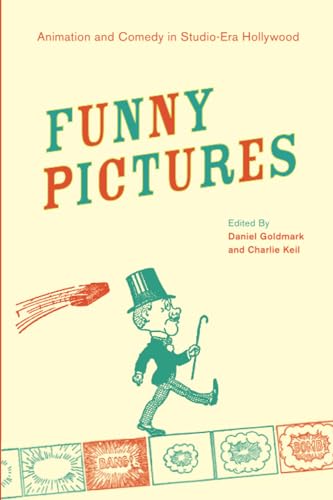
Funny pictures : animation and comedy in studio-era Hollywood / edited by Daniel Goldmark and Charlie Keil.
Material type: TextPublication details: Berkeley : University of California Press, 2011.Description: 341 pISBN:
 - 9780520267244
- NC1766 F943 2011
 English Books
| Cover image | Item type | Current library | Home library | Collection | Shelving location | Call number | Materials specified | Vol info | URL | Copy number | Status | Notes | Date due | Barcode | Item holds | Item hold queue priority | Course reserves | |
|---|---|---|---|---|---|---|---|---|---|---|---|---|---|---|---|---|---|---|
|
English Books
|
MATRIX Library General Eng/FL.3 | General Books | NC1766 F943 2011 (Browse shelf(Opens below)) | C.1 | Available | 1000363180 |
Funny pictures: animation and comedy in studio-era Hollywood -- Contents -- Figures -- Introduction: What Makes These Pictures So Funny? Charlie Keil and Daniel Goldmark -- Part One: The (Filmic) Roots of Early Animation -- 1. The Chaplin Effect: Ghosts in the Machine and Animated Gags Paul Wells -- 2. Polyphony and Heterogeneity in Early Fleischer Films: Comic Strips, Vaudeville, and the New York Style Mark Langer -- 3. The Heir Apparent J. B. Kaufman -- Part Two: Systems and Effects: Making Cartoons Funny -- 4. Infectious Laughter: Cartoons' Cure for the Depression Donald Crafton -- 5. “We're Happy When We're Sad”: Comedy, Gags, and 1930s Cartoon Narration Richard Neupert -- 6. Laughter by Numbers: The Science of Comedy at the Walt Disney Studio Susan Ohmer -- Part Three: Retheorizing Animated Comedy -- 7. “Who Dat Say Who Dat?”: Racial Masquerade, Humor, and the Rise of American Animation Nicholas Sammond -- 8. “I Like to Sock Myself in the Face”: Reconsidering “Vulgar Modernism” Henry Jenkins -- 9. Auralis Sexualis: How Cartoons Conduct Paraphilia Philip Brophy -- Part Four: Comic Inspiration: Animation Auteurs -- 10. The Art of Diddling: Slapstick, Science, and Antimodernism in the Films of Charley Bowers Rob King -- 11. Tex Avery's Prison House of Animation, or Humor and Boredom in Studio Cartoons Scott Curtis -- 12. Tish-Tash in Cartoonland Ethan de Seife -- Part Five: Beyond the Studio Era: Building on Tradition -- 13. Sounds Funny / Funny Sounds: Theorizing Cartoon Music Daniel Goldmark -- 14. The Revival of the Studio-Era Cartoon in the 1990s Linda Simensky -- Bibliography -- Contributors -- Index.
HKBU library
YT2025 M08
This collection of essays explores the link between comedy and animation in studio-era cartoons, from filmdom's earliest days through the twentieth century. Written by a who's who of animation authorities, Funny Pictures offers a stimulating range of views on why animation became associated with comedy so early and so indelibly, and illustrates how animation and humor came together at a pivotal stage in the development of the motion picture industry. To examine some of the central assumptions about comedy and cartoons and to explore the key factors that promoted their fusion, the book analyzes many of the key filmic texts from the studio years that exemplify animated comedy. Funny Pictures also looks ahead to show how this vital American entertainment tradition still thrives today in works ranging from The Simpsons to the output of Pixar.
There are no comments on this title.