
 AI Search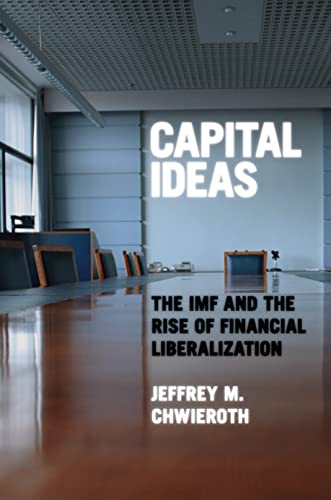
Capital ideas The imf and the rise of financial liberalization. / Chwieroth, Jeffrey M.
Material type: TextPublication details: [S.l.] : Princeton University Press, 2010.Description: 335 pISBN:
 - 0691142327
- 0691142319
- 9780691142326
- 9780691142319
- HG3881 C564 C 2010
 English Books
| Cover image | Item type | Current library | Home library | Collection | Shelving location | Call number | Materials specified | Vol info | URL | Copy number | Status | Notes | Date due | Barcode | Item holds | Item hold queue priority | Course reserves | |
|---|---|---|---|---|---|---|---|---|---|---|---|---|---|---|---|---|---|---|
|
English Books
|
MATRIX Library General Eng/FL.3 | General Books | HG3881 C564 C 2010 (Browse shelf(Opens below)) | C.1 | Available | 1000373535 |
Capital ideas: The imf and the rise of financial liberalization -- Contents -- Figures and Tables -- Preface -- Abbreviations -- Chapter One: Introduction -- Chapter Two: Normative Change from Within -- Chapter Three: Capital Ideas and Capital Controls -- Chapter Four: Capital Controlled: The Early Postwar Era -- Chapter Five: The Limits and Hollowness of Keynesianism in the 1960s -- Chapter Six: Formal Change and Informal Continuity: The Reform Negotiations Of The 1970s -- Chapter Seven: Capital Freed: Informal Change from the 1980S to the Mid-1990s -- Chapter Eight: Capital in Crisis: Financial Turmoil in the Late 1990s -- Chapter Nine: Norm Continuity and Organizational Legitimacy from the Asian Crisis to the Subprime Crisis -- Epilogue: A Subprime -- Index
The right of governments to employ capital controls has always been the official orthodoxy of the International Monetary Fund, and the organization's formal rules providing this right have not changed significantly since the IMF was founded in 1945. But informally, among the staff inside the IMF, these controls became heresy in the 1980s and 1990s, prompting critics to accuse the IMF of indiscriminately encouraging the liberalization of controls and precipitating a wave of financial crises in emerging markets in the late 1990s. In Capital Ideas, Jeffrey Chwieroth explores the inner workings of the IMF to understand how its staff's thinking about capital controls changed so radically. In doing so, he also provides an important case study of how international organizations work and evolve.
There are no comments on this title.